
A small roofing problem may be easy to ignore during dry weather. Once frequent or heavy rain arrives, however, a loose tile, deteriorated seal or blocked gutter can quickly turn into water stains, dripping ceilings and damage inside your home.
Homeowners do not necessarily need to wait until water starts dripping before arranging a repair roof leak inspection. Checking several common problem areas beforehand can help identify early signs of deterioration and reduce the risk of more extensive damage later.
If your roof has not been inspected recently, here are the main areas worth checking before the next period of heavy rainfall.
Start by Looking for Signs Inside Your Home
Some of the earliest indications of a roofing problem appear indoors rather than on the roof itself.
Look around ceilings, upper-floor walls and areas close to the roof for unusual changes. Warning signs can include:
- Brown or yellow water stains
- Bubbling or peeling paint
- Damp patches on ceilings
- Musty smells
- Mould growth
- Water marks that become darker after rain
A stain does not always appear directly underneath the damaged section of the roof. Rainwater can enter through one location and travel along roofing materials or structural components before becoming visible inside the property.
For this reason, simply painting over a ceiling stain does not solve the underlying issue. A proper roof leak inspection and repair should identify where the water is entering before repairs begin.
Check for Cracked, Loose or Missing Roof Tiles
Roof tiles form the main protective layer against rain for many homes. Even one damaged or displaced tile can create an opening where water can enter.
From a safe viewing position, check whether any tiles appear:
- Cracked or broken
- Shifted out of alignment
- Missing entirely
- Loose around the roof edge
- Deteriorated from age or previous damage
Avoid climbing onto the roof yourself unless you have the appropriate experience and safety equipment. Roofing surfaces can become slippery, and damaged areas may not safely support your weight.
If you notice obvious damage, arranging professional Roof repair KL services before prolonged rain can help prevent the affected section from becoming a more serious leak.
Pay Attention to Flashing and Roof Joints
Not every roof leak comes from damaged tiles. Areas where different roof sections meet can also become vulnerable over time.
Flashing is commonly installed around roof joints, walls, vents and other roof penetrations to prevent rainwater from entering through gaps.
If the flashing becomes loose, corroded or separated from the surrounding material, water may find its way underneath the roofing system.
Areas Worth Checking
Pay particular attention to areas around:
- Roof valleys
- Chimneys or vents
- Pipes passing through the roof
- Roof-to-wall connections
- Extensions joining an existing roof
- Ridge and edge sections
These areas are particularly important because they contain joints where different materials meet.
Do Not Ignore Your Roof Gutters
When preparing for heavy rain, the roof itself is only part of the system that should be inspected.
Roof gutters are responsible for collecting rainwater and directing it away from the property. Leaves, dirt and other debris can restrict water flow, causing gutters to overflow during heavy rainfall.
Overflowing water may then run down exterior walls, collect near roof edges or enter gaps around the roofing system.
Check for visible blockages, sagging gutter sections, leaks at joints and gutters that appear to pull away from the roof.
If the gutter is badly damaged rather than simply blocked, professional roof gutter installation and repair may be required to restore proper rainwater drainage.
Look for Rust or Damage on Metal Roofing
Metal deck roofs can provide durable protection, but they should still be checked periodically.
Over time, exposed metal surfaces, fasteners and joints may develop corrosion. Screws can become loose, sealing materials can deteriorate and individual panels may become damaged.
Watch for:
- Visible rust
- Loose or missing screws
- Gaps between panels
- Damaged flashing
- Holes or punctures
- Previous repair areas that are deteriorating
Minor problems may be repairable when identified early. However, extensive corrosion or repeated leaks across multiple sections may indicate that roof replacement should be considered instead of continuing with individual repairs.
Check the Condition of Existing Waterproofing
Concrete roofs, balconies and other exposed surfaces often depend on waterproofing systems to prevent water from penetrating the structure.
Waterproofing materials can deteriorate with age and continuous exposure to weather. Cracks, peeling areas or damaged sections may allow moisture to enter the concrete.
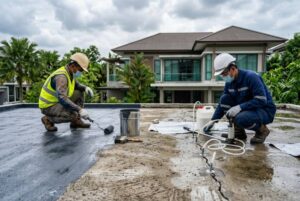
If the existing waterproofing layer is showing signs of deterioration, Touch on membrane waterproofing may be one of the possible treatments depending on the condition and type of surface.
For leaks caused by cracks or joints inside concrete structures, another treatment such as PU injection may sometimes be more suitable. The correct method should be determined after identifying the actual path of the water.
Watch for Areas Where Water Collects on the Roof
Proper drainage is important for both pitched and flat roofing systems.
If rainwater remains on part of a roof instead of draining away efficiently, the affected area experiences longer exposure to moisture. Over time, this can put additional stress on joints, coatings, waterproofing layers and roofing materials.
Standing water may be caused by blocked outlets, damaged gutters or an uneven roof surface.
Simply sealing a visible crack may not provide a lasting solution if poor drainage continues to direct water toward the same area.
Check Previous Roof Repair Areas
If your property has experienced roofing problems before, inspect the previously repaired areas before periods of heavier rain.
Sealants and temporary patches can deteriorate over time, particularly when exposed continuously to heat and rain. A previous repair may also have addressed only the visible damage rather than the original source of the leak.
If the same ceiling stain or damp area keeps returning, it may be worth arranging another inspection rather than repeatedly patching the same location.
A professional bumbung repair assessment can examine the surrounding tiles, flashing, waterproofing, gutters and structural areas to determine why the problem keeps returning.
When Should You Repair a Roof Leak?
The best time to repair roof leak problems is generally before water damage becomes widespread.
You should consider arranging an inspection if you notice recurring ceiling stains, damaged roofing materials, loose flashing, deteriorated waterproofing or leaks that appear whenever there is heavy rain.
Delaying repairs can allow moisture to affect ceilings, paintwork, walls and other parts of the building. What begins as a small roofing problem may eventually require more extensive work.
An experienced Roof repair KL team can inspect the roofing system and determine whether the problem requires a minor repair, waterproofing, roof coating, gutter work or replacement of damaged roofing materials.
Prepare Your Roof Before the Next Heavy Rain
You cannot control when heavy rain will arrive, but you can reduce the chance of being caught by an existing roofing problem.
Checking tiles, flashing, gutters, waterproofing, drainage and previous repair areas gives you a better opportunity to identify deterioration before it develops into an active leak.
If you already notice stains, dampness or visible roofing damage, avoid waiting for another heavy downpour to confirm the problem. Arrange a professional inspection so the cause can be identified and the appropriate repair roof leak solution can be carried out before additional water damage occurs.