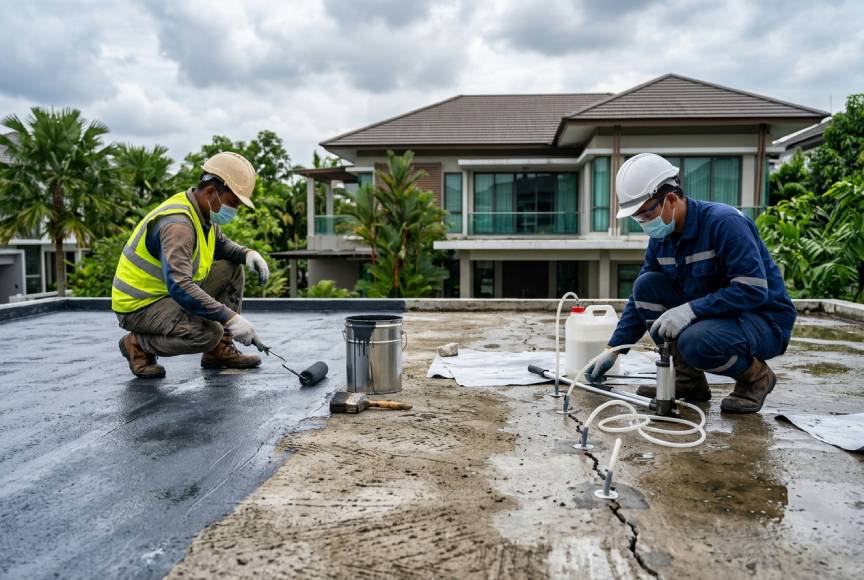
Water leakage can begin with something as small as a crack in a concrete slab or a deteriorating waterproofing layer. However, choosing the right repair method is important because not every type of water seepage should be treated in the same way.
Two methods commonly used to address waterproofing problems are Touch on membrane and PU injection. While both aim to prevent unwanted water from entering a building, they work differently and are suitable for different conditions.
Understanding where the water is coming from, the condition of the affected surface and the type of property structure can help determine which method is more appropriate.
What Is Touch On Membrane Waterproofing?
Touch on membrane is a waterproofing method applied over a prepared surface to create a protective barrier against rainwater and moisture. It is commonly considered for exposed concrete areas where the waterproofing surface has deteriorated or additional protection is required.
Typical areas that may benefit from Touch on membrane include:
- Concrete roofs
- Flat roof surfaces
- Balconies and terraces
- Exposed concrete sections
- Areas with ageing waterproofing
- Surfaces regularly exposed to rain
The main purpose of the membrane is to prevent water from entering through the surface. Proper preparation is particularly important because dirt, damaged material, cracks or existing moisture can affect the performance of the new waterproofing layer.
For properties experiencing problems across a wider exposed area, professional Touch on membrane waterproofing solutions can help restore the protective surface and reduce future water penetration.
What Is PU Injection Waterproofing?
PU injection works differently because it focuses more directly on cracks, joints and internal gaps within concrete structures.
During the treatment, polyurethane material is injected into the affected area. The material enters cracks and hidden voids before forming a waterproof seal that helps stop water from travelling through the structure.
PU injection may be considered for:
- Cracks in concrete roof slabs
- Water leaking through concrete joints
- Basement walls or ceilings
- Concrete walls
- Balconies
- Areas with active water seepage
- Difficult-to-reach cracks inside concrete
Because the treatment targets a specific leakage path rather than covering an entire surface, PU injection for roof leak repair can be useful when water is entering through identifiable cracks or gaps.
Touch On Membrane vs PU Injection: What Is the Main Difference?
The biggest difference is where and how the waterproofing treatment is applied.
Touch on membrane is mainly a surface waterproofing solution. It creates protection over a broader exposed area to reduce water penetration through the surface.
PU injection, on the other hand, is used to treat cracks, joints or voids from within the affected concrete section.
A simple way to understand the difference is:
- Touch on membrane: Protects the surface from water entering.
- PU injection: Seals specific internal cracks or leakage paths.
This means one method is not necessarily better than the other. The right waterproofing method depends on the actual cause of the leakage.
When Should You Consider Touch On Membrane?
Touch on membrane may be suitable when the waterproofing problem affects an exposed surface rather than one isolated crack.
For example, an older concrete roof may begin developing several small cracks or weakened areas after years of exposure to sunlight, heavy rain and changing weather conditions. In this situation, treating only one crack may not provide sufficient protection.
Touch on membrane may be worth considering when:
- Existing waterproofing is ageing or damaged
- Multiple areas of the roof are vulnerable to water penetration
- The exposed concrete requires a new protective barrier
- Balcony or terrace waterproofing has deteriorated
- Water ponding regularly occurs over the affected surface
Before installing a new membrane, the condition of the surface should still be inspected. Existing cracks, drainage problems and damaged materials may require treatment first.
When Is PU Injection More Suitable?
PU injection is generally more targeted.
If water is entering through a particular concrete crack, construction joint or hidden gap, covering a large area with waterproofing may not directly address the path through which the water is travelling.
This is where PU injection waterproofing can be useful.
For example, a homeowner may notice water stains or dripping from a concrete ceiling during heavy rain. The visible leak inside the property may originate from a crack elsewhere in the slab because water can travel through gaps before appearing indoors.
Identifying the leakage source before beginning treatment therefore plays an important role in determining whether PU injection is appropriate.
Can Touch On Membrane and PU Injection Be Used Together?
Yes. Some waterproofing situations may require more than one treatment.
A concrete roof could have an active crack that allows water to pass through the slab while its existing surface waterproofing has also deteriorated. PU injection may be used to treat the specific crack, while Touch on membrane may be applied to improve protection across the exposed surface.
The exact combination depends on the condition of the roof.
This is why a proper roof leak inspection and repair is preferable to simply choosing a waterproofing product based on the visible water stain.
Which Waterproofing Method Does Your Property Need?
Before deciding between Touch on membrane and PU injection, several factors should be considered.
Location of the Leakage
Determine whether the problem is coming from a specific crack or affecting a wider roof, balcony or concrete surface.
Condition of the Existing Waterproofing
Old, cracked or deteriorated waterproofing may require surface restoration rather than treatment of one isolated point.
Type of Concrete Damage
Visible cracks, joints and internal voids may make PU injection more appropriate, particularly when water is already travelling through the concrete.
Drainage and Water Ponding
Waterproofing alone may not completely solve a recurring problem if poor drainage allows water to remain on the roof for long periods. Drainage conditions should therefore be checked as part of the inspection.
In some situations, additional treatments such as roof coating and waterproofing or repairs to damaged roof components may also be required.
Why Identifying the Source of a Roof Leak Matters
One common mistake is treating only the area where water becomes visible inside the building.
A ceiling stain does not always show the exact location where rainwater entered. Water may travel underneath roofing materials, through concrete cracks or along joints before appearing somewhere else.
Applying waterproofing without identifying the source may therefore address the symptom without solving the underlying problem.
Professional inspection can help determine whether the property requires Touch on membrane, PU injection, crack treatment, drainage improvement or another type of roof repair service.
Protect Your Property Before Water Damage Gets Worse
Both Touch on membrane and PU injection can play important roles in protecting buildings from water seepage, but they solve different waterproofing problems.
Touch on membrane is generally more suitable when a wider surface needs waterproof protection, while PU injection is more targeted toward cracks, joints and internal concrete leakage.
For properties experiencing repeated roof leaks, damp ceilings, peeling paint or water stains, identifying the cause early can help prevent the damage from spreading further.
If you are unsure which waterproofing method your property requires, arrange an inspection of the affected area. A professional assessment can determine whether Touch on membrane, PU injection or a combination of waterproofing and roof repair methods provides the most suitable solution.