Completing a roof renovation can improve the appearance, weather protection and overall condition of your property. However, one part of the roofing system that can easily be overlooked during the project is the gutter.
An existing gutter may have worked adequately with the old roof, but changes to the roof shape, roofing material or drainage layout can affect how rainwater reaches the gutter afterward.
In some situations, gutter replacement becomes an important part of completing the renovation properly. Rather than automatically keeping the old system, homeowners should check whether it still matches the requirements of the renovated roof.
Why Should Gutters Be Checked During Roof Renovation?
A roof and its gutter system work together.
The roof directs rainwater toward its edges, while the gutter collects that water and channels it toward the downpipes and drainage system. If either component is not working correctly, water may overflow, collect around the roof edge or run down exterior walls.
A roof renovation can change:
- The position of the roof edge
- The direction of water flow
- The roof slope
- The roofing material
- The volume of water reaching particular gutter sections
- The location of valleys or drainage points
This is why inspecting the existing gutter should form part of the renovation process.
Professional roof gutter installation and replacement can help ensure that the drainage system continues to work correctly with the newly renovated roof.
When Is Gutter Replacement Necessary After Renovation?
Not every roof renovation requires new gutters. If the existing system remains in good condition and matches the new roof layout, it may still be suitable.
However, gutter replacement should be considered when the renovation reveals problems that could affect drainage.
The Existing Gutters Are Rusted or Corroded
Older metal gutters may develop corrosion after years of exposure to rain and moisture.
Small areas of surface wear may sometimes be manageable, but extensive rust around the gutter base, joints or connection points can weaken the system.
Installing a renovated roof while leaving badly deteriorated gutters in place could mean another repair project is required soon afterward.
Replacing both at the appropriate time can provide a more complete roofing and drainage solution.
The New Roof No Longer Aligns With the Old Gutter
Roof renovation may change the position or shape of the roof edge.
If the existing gutter sits too far away, too low or at an unsuitable angle, rainwater may overshoot the gutter instead of flowing into it.
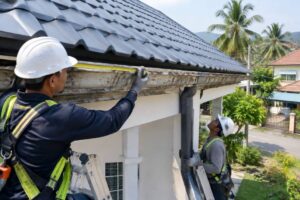
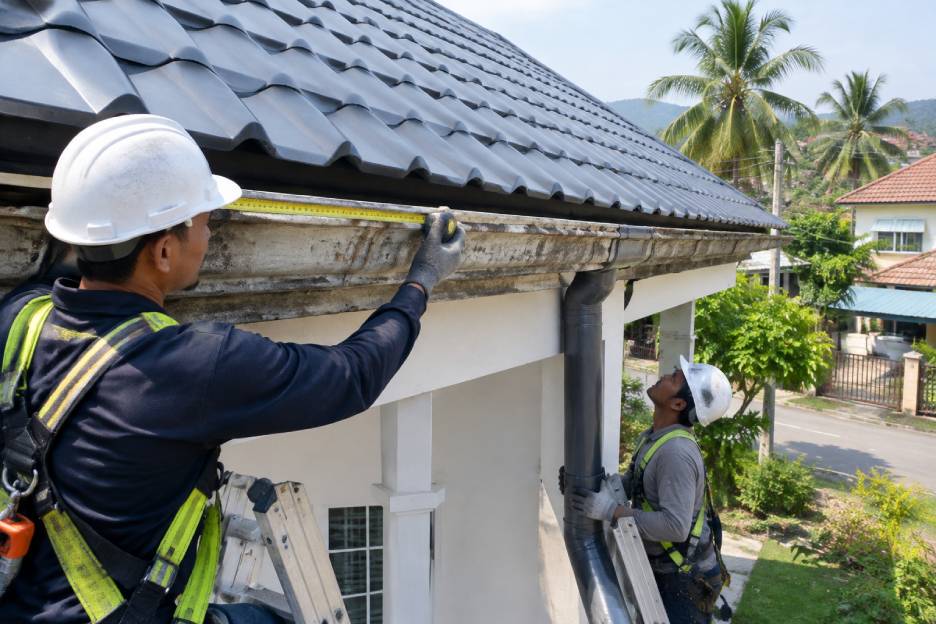
A professional roof gutter KL assessment can check whether the existing gutter position remains suitable after renovation.
Proper alignment is especially important during heavy rain, when a large amount of water may move across the roof surface within a short period.
The Existing Gutter Is Too Small
Changing the roofing layout can also change how rainwater is distributed.
For example, an extension may create a larger roof area that directs additional water toward one section of gutter. A gutter that was adequate for the original roof may no longer handle the same drainage requirements after renovation.
In this situation, installing a larger or better-planned system may improve rainwater management.
Roof Extensions Can Change Your Drainage Requirements
Home renovations often involve more than replacing roofing materials. Some projects extend kitchens, balconies, porches or upper floors.
When the roof becomes larger, its drainage system also needs to accommodate the additional surface area.
The renovation may create:
- New roof valleys
- Additional gutter sections
- Longer roof edges
- New downpipe locations
- Different water-flow directions
Simply connecting the new roof to the old gutter without considering these changes may create areas where too much water enters one gutter section.
Planning gutter replacement together with the roofing work allows the gutter and downpipe layout to be adapted to the new structure.
Do the Downpipes Need to Be Replaced Too?
The gutter itself is only one part of the rainwater drainage system.
After collecting water from the roof, gutters direct it toward the downpipes. If the gutter has been upgraded but the existing downpipes are damaged, too small or poorly positioned, drainage problems may continue.
During a gutter inspection, it is useful to check:
- Downpipe condition
- Connection points
- Water discharge locations
- Blockages
- Cracks or leaks
- Whether enough downpipes are provided
The goal is to ensure that water can move smoothly from the renovated roof all the way into the appropriate drainage area.
What If You Are Replacing a Metal Deck Roof?
A metal deck roofing replacement project is a particularly good opportunity to inspect the gutter system.
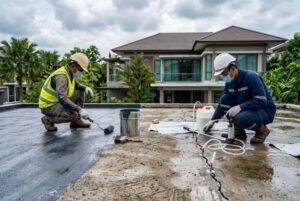
When old metal roofing panels are removed, contractors can access roof edges, flashing and gutter connection areas more easily. This makes it possible to identify corrosion, poor alignment or drainage problems that may not have been obvious previously.
The new metal deck profile may also differ from the old roofing material.
Because of this, the position of the gutter should be checked before the project is considered complete.
If both the roof and gutter are ageing, replacing them within the same renovation project may create a more coordinated drainage system.
Can Existing Gutters Simply Be Repaired?
Sometimes, yes.
A complete gutter replacement is not always necessary just because a roof has been renovated.
If the gutter remains structurally sound, smaller issues may be addressed through:
- Joint repair
- Realignment
- Replacement of damaged sections
- Re-securing loose brackets
- Downpipe adjustments
- Cleaning and maintenance
The condition of the entire system should determine the decision.
If damage is isolated to one small area, repair may be practical. If deterioration appears throughout multiple sections, replacement may provide a more appropriate solution.
Why Gutter Alignment Matters After Roof Work
A gutter normally requires a suitable fall toward its drainage outlet so that rainwater can move toward the downpipe.
If renovation work disturbs the brackets or changes the roof edge without checking the existing gutter position, water may remain inside certain sections rather than draining properly.
Poor alignment can contribute to overflowing or standing water within the gutter.
This is why professional roofing services should consider both the roofing surface and the drainage components around it, particularly after significant renovation work.
Should Gutters Be Replaced During Roof Replacement?
If you are planning a full roof replacement, it is worth inspecting the gutter at the same time.
This does not mean the gutter must automatically be replaced. Instead, the renovation provides a convenient opportunity to assess whether it is still appropriate for the new roofing system.
Keeping an existing gutter makes sense when it remains in good condition, is correctly positioned and can manage the required rainwater flow.
Replacement becomes more practical when the system is badly corroded, incorrectly aligned, repeatedly leaking or unsuitable for the renovated roof.
Plan the Roof and Gutter as One Drainage System
A roof renovation should not end with the roofing material alone.
The roof, flashing, gutters and downpipes all contribute to moving rainwater away from the property. If the newly renovated roof works well but the old gutter cannot manage the water effectively, drainage problems may remain.
Before deciding on gutter replacement, have the existing system checked for its condition, size, alignment and compatibility with the renovated roof.
For homeowners looking for roof gutter KL services, a professional inspection can determine whether the existing gutter can be retained, repaired or should be replaced as part of the completed roofing system.
Taking care of both the roof and its drainage system during renovation can help your newly improved roof perform as intended when the next heavy rainfall arrives.